
Why build with ICF.
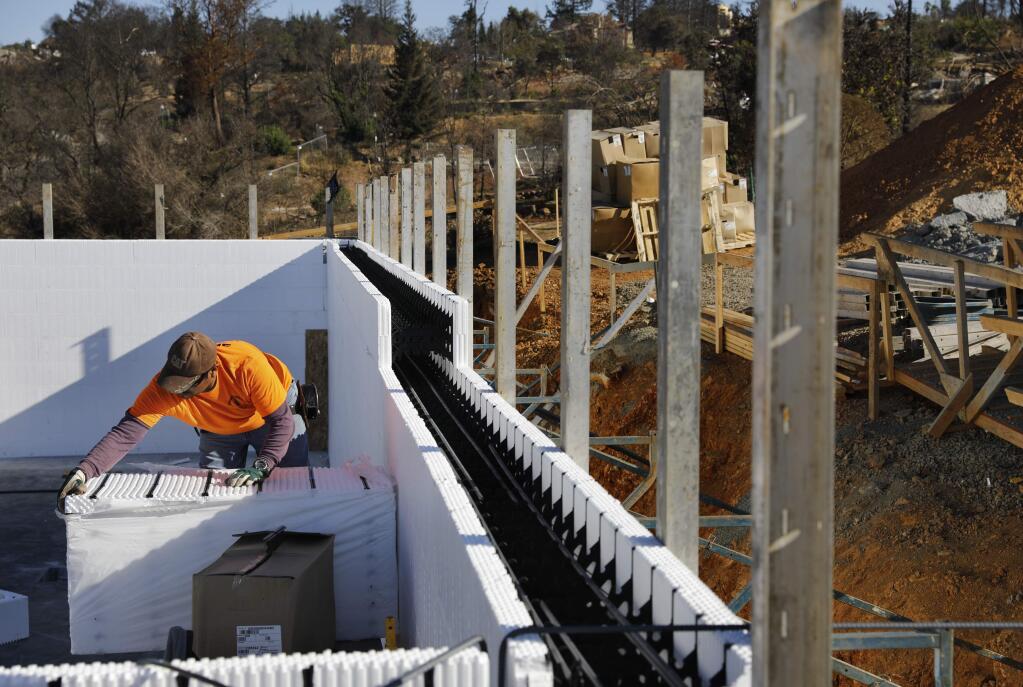
Stronger, quieter, more efficient walls — built in fewer steps. Here’s what that means for your project.
Lower energy use, year-round
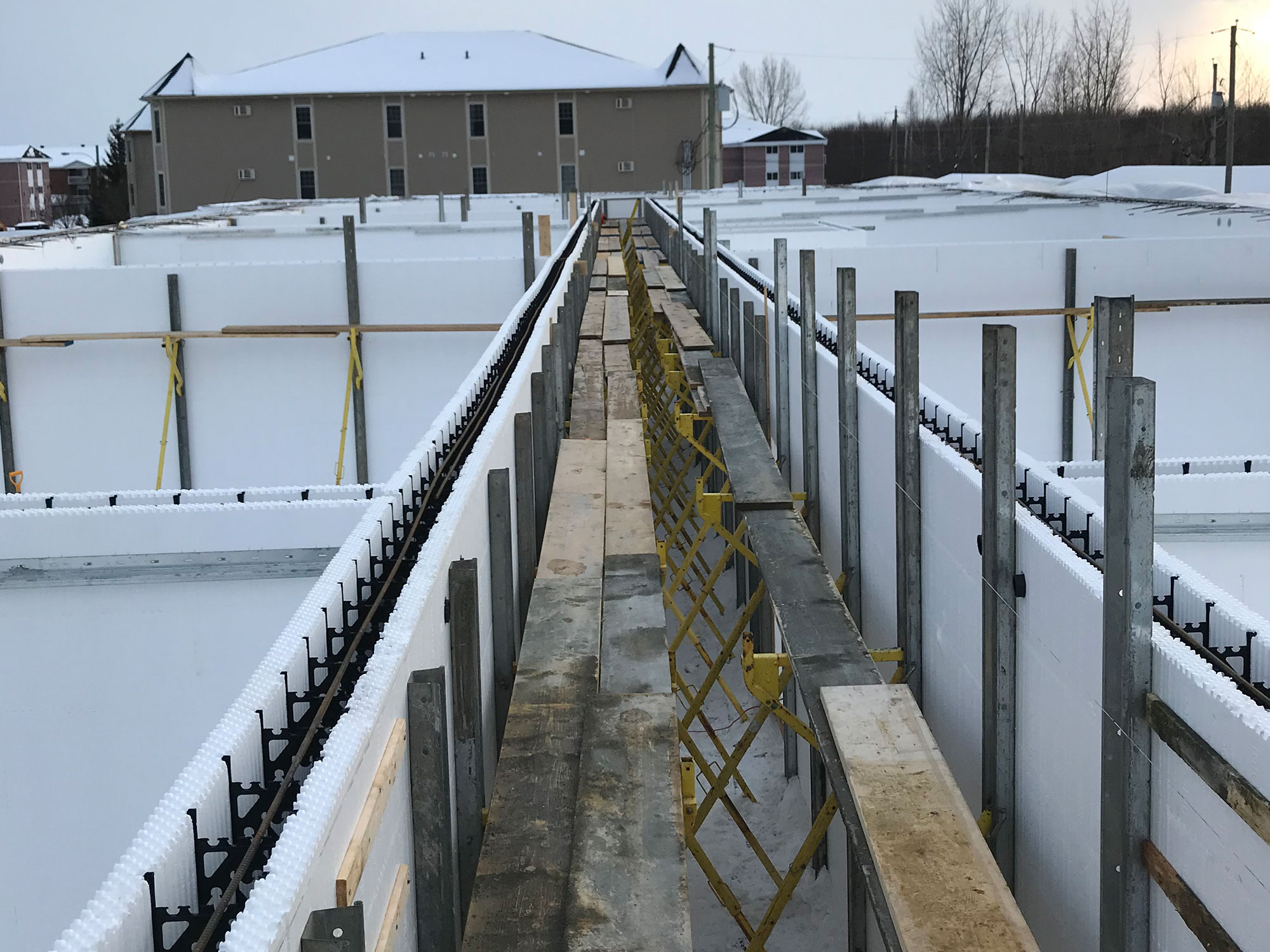
Continuous EPS insulation covers both faces of the concrete, with no studs to carry heat through the wall resulting in no energy loss. The concrete core also stores heat and stabilizes temperature swings, so your HVAC works less to keep the building cool or warm.
Built for severe weather
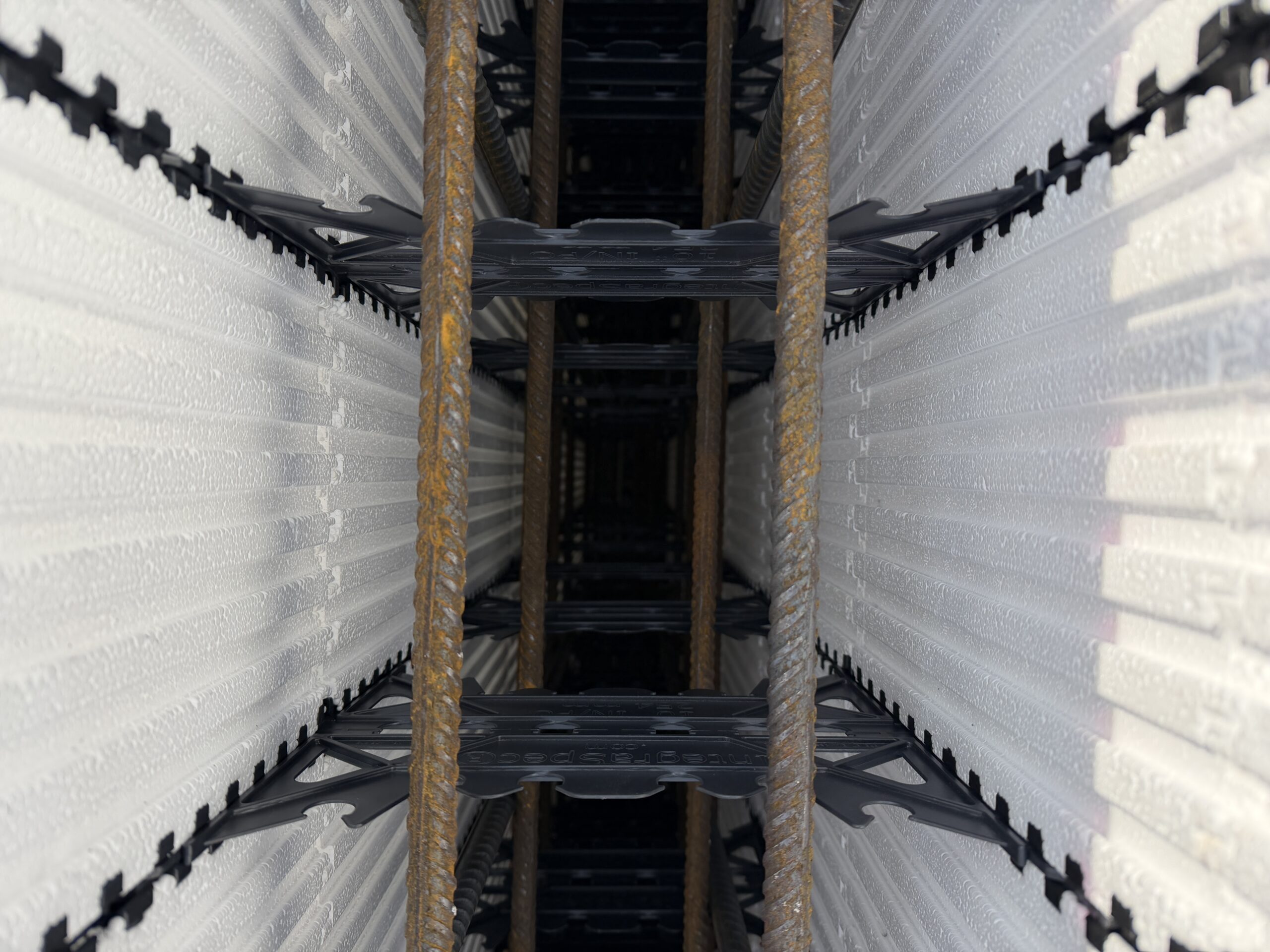
A reinforced concrete wall resists tornado or hurricane high winds up to 400km/h (250mph), impact and moisture damage, preventing wood rot and pests from entering the walls. Walls are engineered, specified and reinforced per region, zone and climate.
Concrete Doesn't Burn
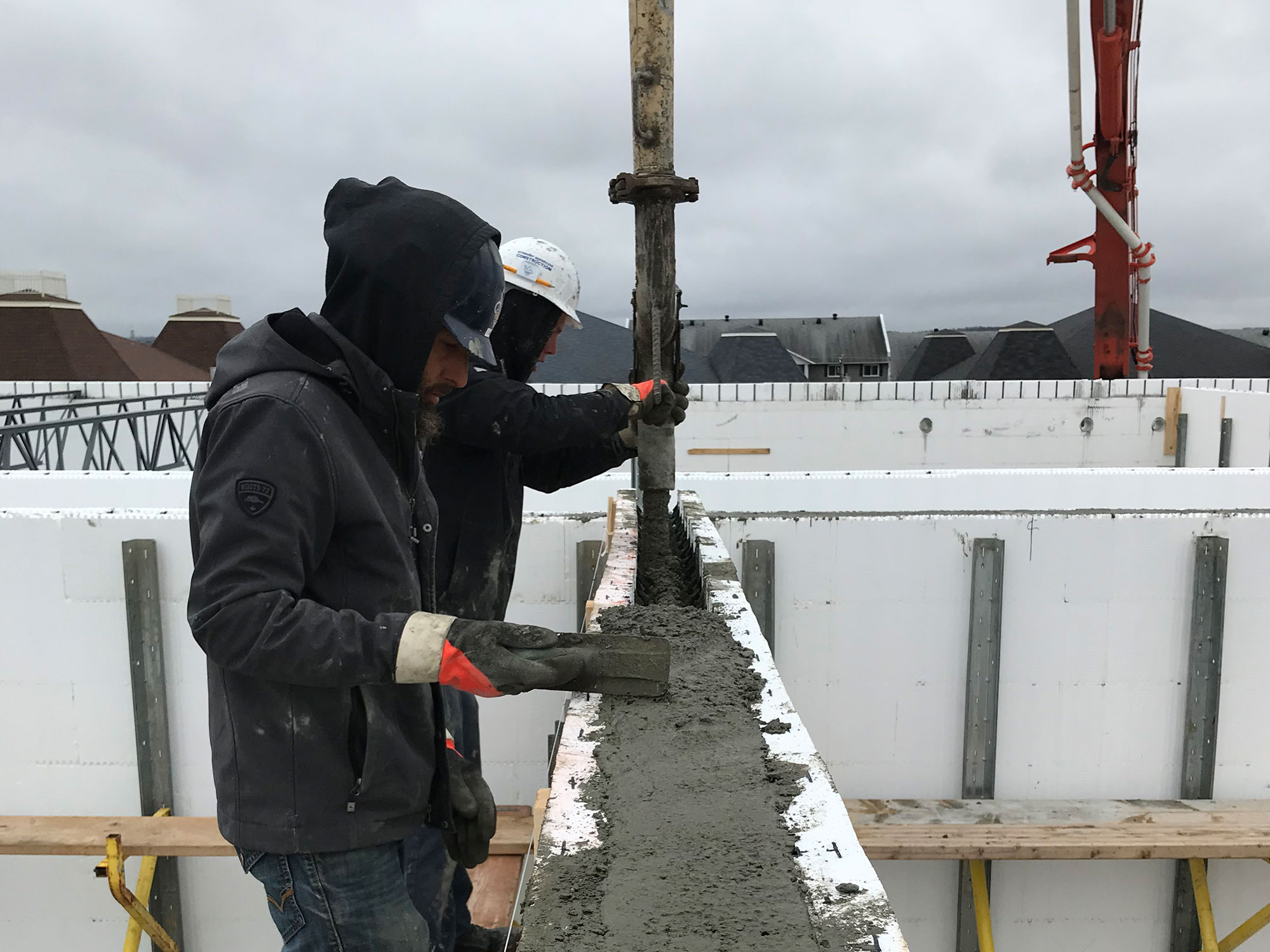
The concrete core prevents fire from spreading between rooms and units, which is critical for mulit-unit buildings. ICF walls have been tested and are fire-rated up to 4 hours.
A noticeably quieter building
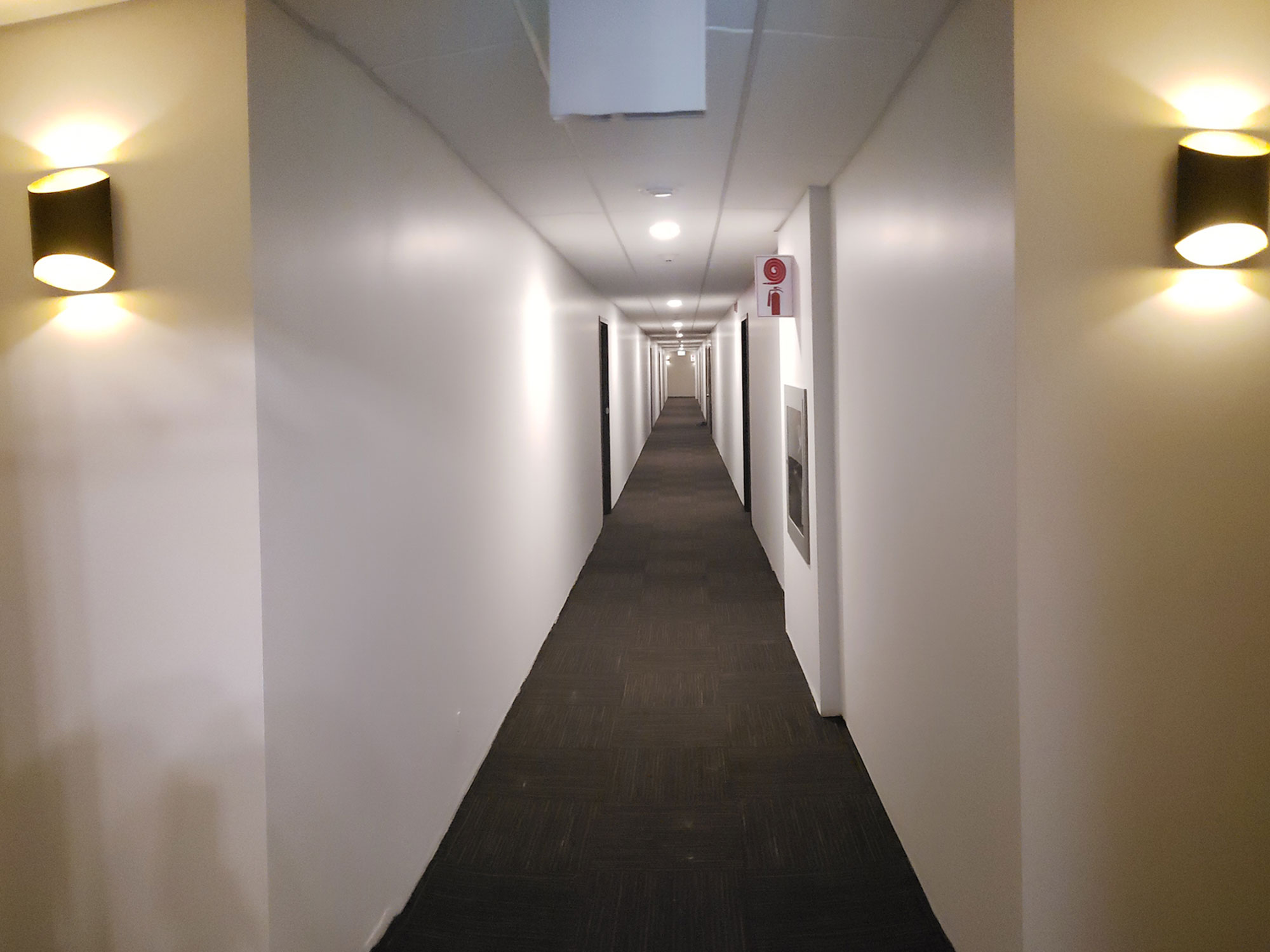
The mass of concrete combined with the EPS cuts noise and sound transfer from passing through walls. Sound rated for STC 50+ or greater compared to STC 38 for an insulated wood-stud wall.
Steady temperatures, Healthy indoor air
An airtight wall with continuous insulation keeps interior temperatures even from floor to ceiling and wall to wall. No volatile organic compounds (VOCs) and does not support the growth of mold or mildew for a healthier and quality indoor air.
Fewer steps, Lower Lifetime Costs
Structure, insulation, air barrier and furring constructed as one system and aseembly. Fewer trades and contractors are needed on site. Lower energy bills and low maintenance add up over the life of the building.
ICF vs. wood frame vs.
conventionally formed concrete.
A general, qualitative comparison. Performance of conventional walls to an IntegraSpec ICF wall.
IntegraSpec ICF
Wood frame
Formed concrete
Is ICF right
for your build?
We’ll let you know after discussing and reviewing your project plans. Contact us today.